In This Article
- The Vaquero Origins — New Spain, 1500s–1700s
- The American Stock Saddle, 1800s
- The Early Saddle Makers, 1850–1910
- The Age of Specialization, 1900–1950
- NRHA and NCHA — Disciplines Define the Saddle
- The Modern Performance Saddle, 1980–Present
- The Tree: The Foundation of Everything
- The Great Makers Shaping the Industry Today
- Western Saddles Today
The western saddle is one of the most recognizable objects in American culture — horn, high cantle, wide stirrups, and hand-tooled leather that can take a craftsman weeks to complete. But beneath the iconography is a functional object that has been refined over five centuries in direct response to the demands of working horses, working cattle, and increasingly sophisticated equestrian competition.
This is not a simple story. The western saddle did not spring fully formed from the American frontier. It arrived on this continent from Spain, carried by conquistadors and the vaqueros who followed them. It was adapted, regionalized, specialized, and argued over across centuries of cattle work, show competition, and saddle-maker innovation. Understanding where the western saddle came from explains everything about why it looks the way it does today.
The Vaquero Origins — New Spain, 1500s–1700s
The story of the western saddle begins in the Iberian Peninsula, where Spanish and Moorish horsemanship traditions merged over centuries of mutual influence. The Moors, who occupied much of Spain from 711 to 1492, brought with them the jinete style of riding — short stirrups, direct rein contact, and horses that responded to subtle leg and seat cues. The Spanish adapted this and blended it with their own heavier, armored-cavalry tradition, producing a horseman who could work cattle, cover rough terrain, and engage in combat from horseback.
When the Spanish colonized Mexico and the American Southwest in the 16th and 17th centuries, they brought this equestrian culture with them. The cattle ranches of New Spain — haciendas spreading across what is now Texas, California, New Mexico, and northern Mexico — required skilled horsemen to manage vast herds of longhorn cattle. These horsemen were the vaqueros.
The vaquero's saddle was adapted from Spanish war saddles: heavy, deeply built, with a prominent pommel, tall horn for dallying rope, and a cantle that kept the rider seated during violent maneuvers. The tree — the internal wooden frame that gave the saddle its shape — was typically covered in rawhide, which contracted as it dried, producing a structure of remarkable rigidity and durability.
The tree is the internal skeleton of every saddle — traditionally carved wood, today often fiberglass or laminated wood — that determines the saddle's shape, fit, and structural integrity. Every other component of the saddle is built around the tree. A cracked or broken tree makes a saddle dangerous and effectively worthless. The tree is why evaluating used saddles requires hands-on assessment before purchase.
Two distinct vaquero traditions developed over the 18th century that would produce the two great regional styles of American western saddlery. The California vaquero — working the coastal ranchos — developed a refined, elaborately decorated style characterized by intricate rawhide braiding, heavy silver, centerfire (single) rigging, and the practice of using a longer hackamore and bridle progression before ever introducing a bit. The Texas and Plains vaquero, working rougher terrain and larger herds with less time for refinement, favored a heavier, more practical rig with double-rigging (two cinches) and a higher, more massive horn.
These two traditions — California and Texas — would compete and interbreed throughout the 19th and 20th centuries, producing the regional variations that gave rise to every specialized western saddle discipline we know today.
The American Stock Saddle, 1800s
Era: 1800–1900The Mexican-American War (1846–1848) and the subsequent expansion of American cattle ranching into the Great Plains accelerated the development of a distinctly American saddle tradition. Anglo cowboys encountered vaquero horsemanship and immediately recognized its utility — but adapted the tools to their own needs, preferences, and manufacturing capabilities.
The great saddle-making centers of the 19th century were in Texas, particularly in San Antonio and later in cities like Denver and Miles City, Montana. These shops produced working stock saddles — heavy, practical, built for long days and difficult conditions. The iconic western saddle that Americans recognize today, with its high horn, substantial cantle, and wide leather skirts, was standardized during this period.
Several key design decisions made during this era would persist into every specialized discipline saddle of the 20th century:
- The double-rigging system — front and rear cinches — gave the saddle exceptional stability when roping heavy cattle
- The slick fork versus swell fork debate defined regional aesthetics: Texas preferred the clean, understated slick fork; the Northern Plains and Montana favored the pronounced swelled fork
- The stirrup fender — the wide leather panel between the stirrup leather and the rider's leg — protected cowboys from constant abrasion and became a defining visual element of the western saddle
- Hand-tooled leather evolved from simple protection against abrasion into elaborate floral and geometric decoration that signaled the craftsman's skill and the owner's status
By 1900, the western stock saddle had reached a mature form that would remain recognizable for the next century — but the age of specialization was about to begin.
The Early Saddle Makers, 1850–1910
Era: 1849–1928The American western saddle did not emerge from a single workshop. It was shaped by a generation of craftsmen and firms working in distinct regional centers — California, Cheyenne, Pueblo, Miles City, the Pacific Northwest, and Texas — each adapting the Spanish and Mexican vaquero saddle to the demands of American cattle work. Understanding these makers explains why the regional saddle styles diverged the way they did, and why so many of their design decisions survive in every saddle built today.
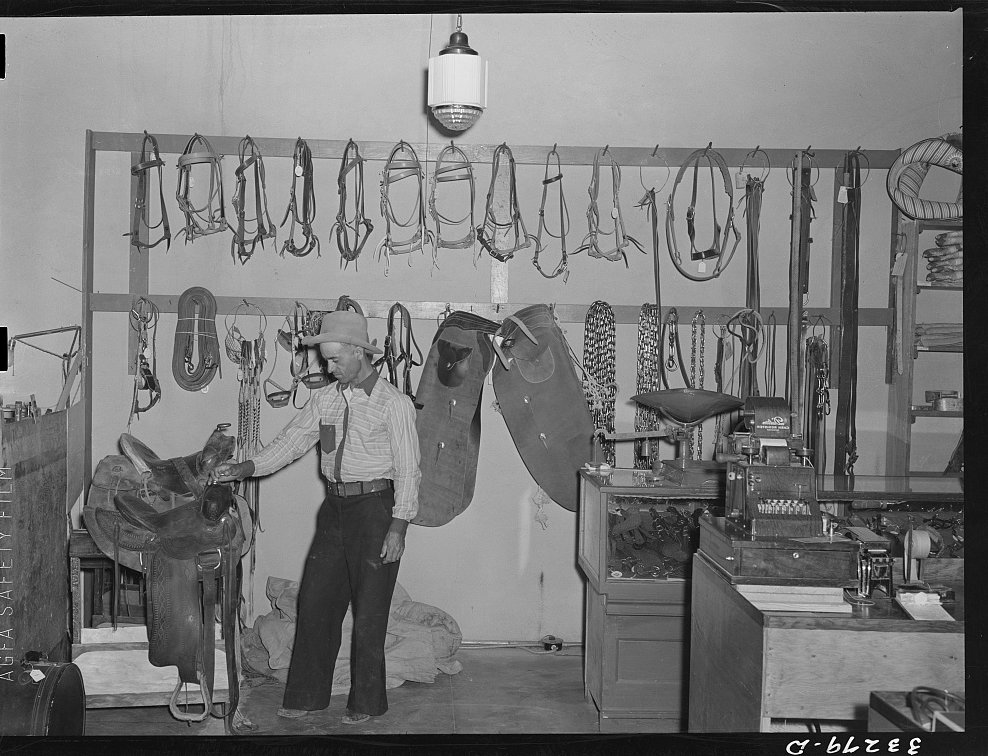
Main & Winchester — San Francisco, 1849
Main & Winchester was the first saddlery of real significance on the entire Pacific Coast. Charles Main, formerly a partner in a Boston carriage-and-harness firm, sailed from the East and arrived in San Francisco during the Gold Rush; there he met Ezra H. Winchester, and in 1849 the two founded the firm that would carry their names. Rather than chase gold in the placer diggings, they set out to sell high-quality horse tack to the miners and merchants pouring into California.
The firm prospered almost immediately. In 1860 it secured the contract to supply saddles for the Russell, Majors & Waddell Pony Express line — an early mark of its reach and reputation. Over the following decades Main & Winchester grew into one of the largest catalog suppliers of western gear in the country, moving into progressively larger quarters and contracting skilled independent craftsmen to produce bits and spurs stamped with the Main & Winchester mark. In 1905 the firm consolidated with the other pioneer San Francisco house, L.D. Stone & Company, forming Main-Winchester-Stone; after the 1906 earthquake the business relocated across the bay, and by 1912 it had been absorbed into Keyston Brothers.
Beyond its own output, Main & Winchester mattered as a training ground. David E. Walker, who would go on to build the Visalia saddle into one of the most influential patterns in the West, worked at Main & Winchester in San Francisco before buying the Visalia shop — one of the direct threads connecting the earliest California commercial saddlery to the stock saddle that followed.
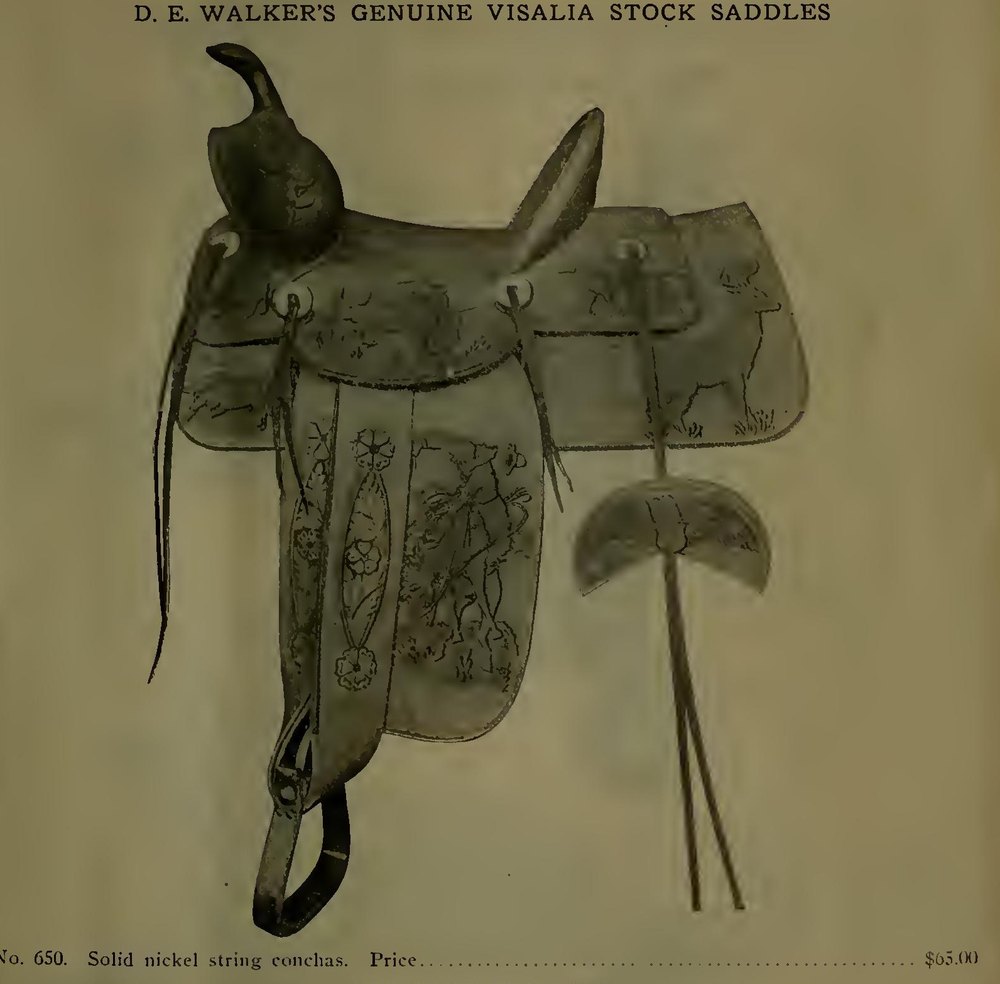
The Visalia Craftsmen and D.E. Walker — Visalia, California, 1869–1870
If any single pattern can be called the ancestor of the modern western stock saddle, it is the Visalia. Its origins lie with a trio of Mexican-American craftsmen from the Mexican state of Sonora — Juan Martarell, together with Ricardo Mattley and Alsalio Herrera — who had come to California during the Gold Rush and settled in the Hispanic community of Hornitos before moving to Visalia, in the heart of the San Joaquin Valley's open-range cattle country. According to the account preserved by the National Park Service, Martarell first arrived at his new design when a vaquero brought in a worn Spanish saddle for repair; instead of merely fixing it, Martarell reworked the whole rig, producing a saddle that was lighter, stronger, and more comfortable for both horse and rider.
The result — which Martarell called the vaquero saddle — lacked the tall horn and long stirrups of the older Spanish pattern and added a skirt to protect the rider's legs. Each craftsman contributed his specialty: Mattley carved the saddle trees from native oak, and Herrera, an expert silversmith, did the silverwork. Around 1869 they opened their shop and the design quickly gained renown across the cattle ranges.
Within about a year, Martarell sold the business to David E. Walker, the former Main & Winchester saddler, though the founding craftsmen continued making saddles under the Visalia name. Walker registered his trademark, stamped his mark on every saddle, and — well ahead of his time as a salesman — printed handbills and assembled a catalog that carried the Visalia saddle to stockmen throughout the United States and its territories. The firm eventually formalized the "Visalia Stock Saddle Company" name and opened a San Francisco store, and the phrase that grew up among working cowboys — that a man riding a Visalia was riding the best — captured how completely the pattern had come to define the California style. Nearly every modern stock saddle descends, in its tree and its lines, from the Visalia.
E.L. Gallatin — Denver and Cheyenne, 1860s–1880s
Edward L. Gallatin was, in the words often repeated by saddle historians, the father of the western stock saddle east of the Rockies. Born in Missouri in 1828, he learned the trade under the noted St. Louis saddler Israel Landis and built the saddles used on the 1860 Pony Express — a credential that placed him at the very origin of the western saddle's development on the Plains.
Drawn by the Colorado gold rush, Gallatin moved to Denver, where his business prospered and, in the early 1860s, he formed a partnership with Francis Gallup — the firm operating under the names E.L. Gallatin & Company and later Gallup & Gallatin. In 1868 Gallatin headed north to the booming railroad town of Cheyenne, Wyoming, and hired his young nephew, Frank Meanea, to run the shop there. The business grew to encompass shops in Cheyenne and Nebraska City, and the fame of the Gallatin saddles spread until his Cheyenne and Pueblo rigs became standard outfits from the Texas Panhandle to the Canadian border. Gallatin sold his Denver interests to Francis Gallup in 1873, and his Cheyenne shop passed to Meanea shortly thereafter — but his influence can be found in nearly every stock-saddle pattern that developed east of the Rockies.
Frank A. Meanea — Cheyenne, Wyoming, 1868–1928
Frank A. Meanea (1849–1928) was born near Lexington, Missouri, and got his first experience in leatherwork repairing harness for the Union Pacific Railroad. In 1868, at the age of nineteen, he came to Cheyenne to manage the saddle shop owned by his uncle, E.L. Gallatin. Roughly eight years later he bought the shop — located at 218 West 17th Street — outright, using the Gallatin stamp until 1881 and his own "F.A. Meanea, Maker, Cheyenne" mark thereafter (marked "W.T." for Wyoming Territory on earlier saddles, and "Wyo." after statehood in 1890).
Meanea did more than inherit a business; he helped create a saddle. Working from the deeper-seated, California-derived trees favored in the region, he originated the distinctive Cheyenne saddle, and he is specifically credited with inventing the Cheyenne cantle roll — the rolled leather binding at the back of the seat that became a hallmark of the Plains saddle. His brother Theodore, a gifted tree maker in Denver, supplied many of the trees Meanea used, including patented iron-reinforced horns. Frank Meanea was also a genuine pioneer of the mail-order saddle business, and by 1900 his shop employed some twenty-two leather workers, producing not only saddles but spur straps, cartridge belts, bits, and spurs. His saddles, priced from roughly $25 to $55, could be found in every state in the country and reached customers as far away as Canada, France, Russia, England, and Australia, and his clientele famously included Buffalo Bill Cody and Theodore Roosevelt. He continued making saddles until his death in 1928, and the Meanea Saddle Shop is remembered as one of Cheyenne's pioneering businesses.
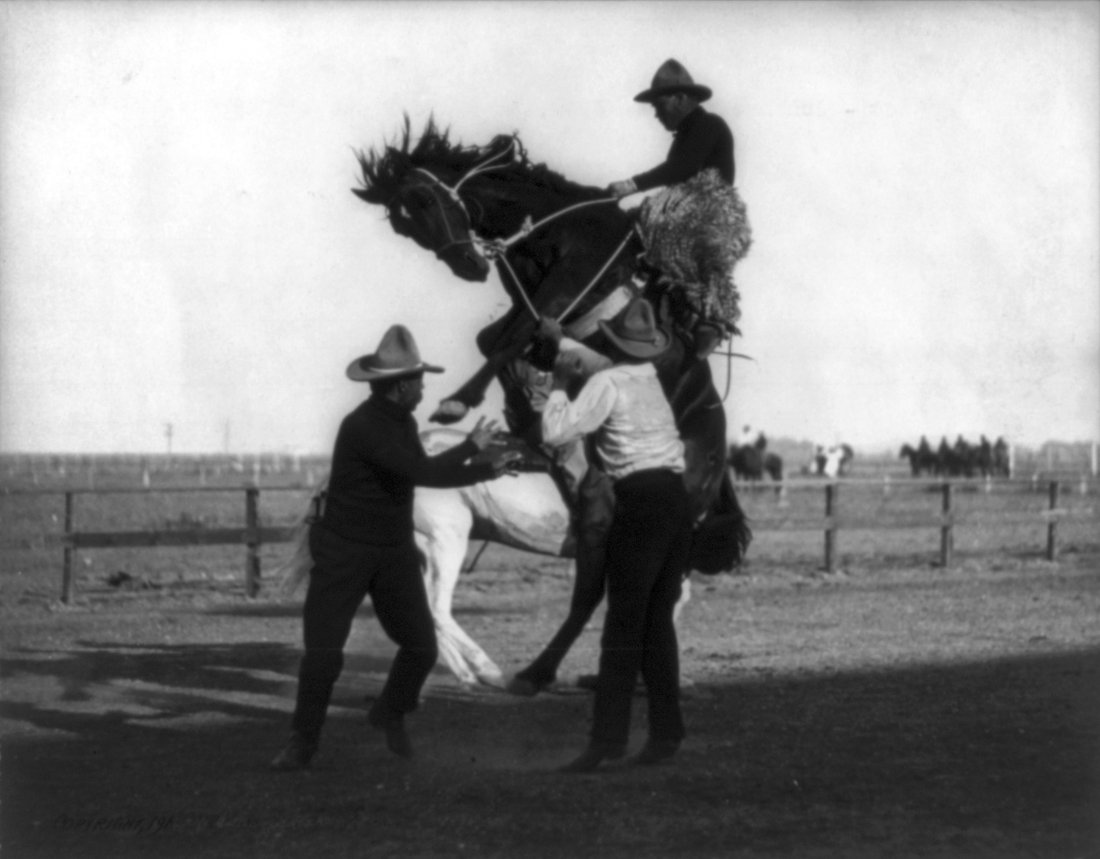
S.C. Gallup and R.T. Frazier — Pueblo, Colorado, 1869–1898
Pueblo, Colorado, sat squarely on the cattle trails running north out of Texas, and between roughly 1870 and 1921 it was considered the saddle-making capital of the world. The pattern that made it famous — the heavy, large-skirted Pueblo saddle — was established by Samuel Caldwell Gallup, the younger brother of Gallatin's Denver partner Francis Gallup. Having learned the craft at the Gallup & Gallatin saddlery in Denver, S.C. Gallup opened his own shop in Pueblo around 1869–1870 with E.L. Gallatin's help, and his rigs — with their high cantles, double cinches, and enlarged skirts built for hard range work — sold as far afield as Kansas, New Mexico, and even Cuba.
Robert Thompson Frazier (1850–1931) became the other great Pueblo name. Born in New Philadelphia, Ohio, and taught saddlemaking by his father, Frazier fought in the Civil War, spent time in Leadville during the mining boom — where he ran a saddle shop and served as a deputy sheriff — and worked for the Pete Becker saddlery in Colorado Springs before coming to Pueblo in 1880 to work for Gallup. He rose to a partnership, and the Gallup & Frazier Saddlery, marked with its longhorn-steer trademark, flourished for about a decade; a Gallup & Frazier saddle took first prize at the 1893 Chicago World's Fair. When the partnership dissolved around 1898, Frazier opened his own shop and built one of the largest saddle operations in the country, employing some fifty saddlemakers by 1915 and pioneering the mail-order catalogs that cowboys came to call "the cowboy's bible." His saddles won top honors again at the 1915 Panama-Pacific Exposition, and his customers ranged from Buffalo Bill Cody to Pancho Villa. The R.T. Frazier House in Pueblo, built in 1915, survives on the National Register of Historic Places.
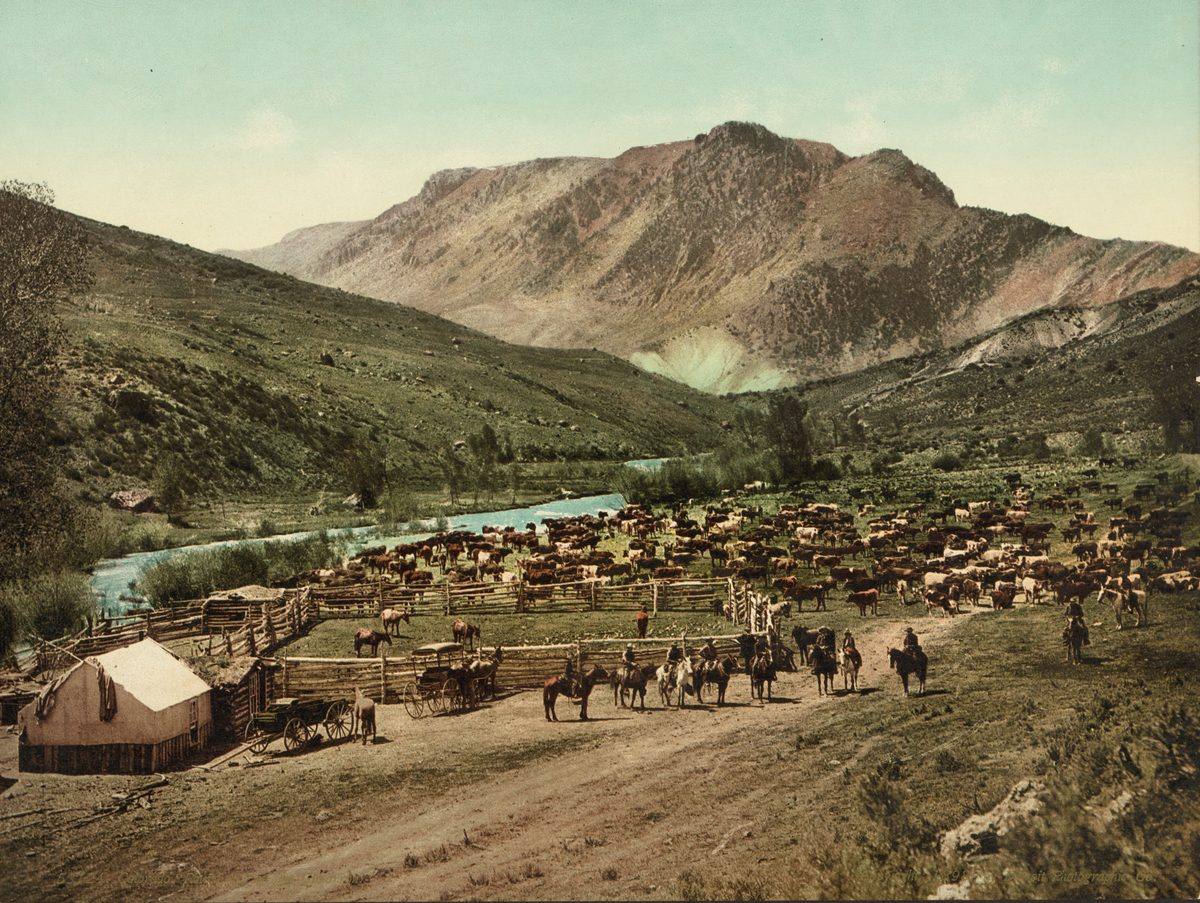
Al Furstnow and Charles Coggshall — Miles City, Montana, 1894–1909
Miles City, Montana, was a legendary cattle town — the end of the trail for many Texas cattle drives — and it became home to more saddle shops than almost anywhere else in the country. Its defining maker was Al Furstnow, who had learned the trade from his father and worked for saddleries in Cheyenne, Omaha, and elsewhere before settling permanently in Miles City in 1894 and opening Al Furstnow's Saddle Shop. His saddles became so well known across the Northern Plains that cowboys simply called their rig their "Furstnow."
Late in 1894 the shop gained capital and a business partner when Charles E. Coggshall, who had been ranching with his father, bought a half-interest. Coggshall was not himself a bench saddlemaker, but as an experienced horseman he had a keen eye for what made a good saddle, and under his direction the Montana saddle tree was refined. Furstnow and Coggshall built the only major saddlery between Billings and Dickinson, North Dakota, before the partnership dissolved around 1899 and the two men set up rival shops. Coggshall subsequently acquired the old Moran Brothers saddlery; in 1909 three of his top craftsmen bought him out and incorporated the business as the Miles City Saddlery, which carried on the "Original Coggshall Saddle." What set the Miles City makers apart was scale: they blended Eastern assembly-line techniques with Western custom craftsmanship, turning saddle-making into a genuine industry — by the 1920s Miles City counted dozens of saddlemakers producing thousands of saddles a year.
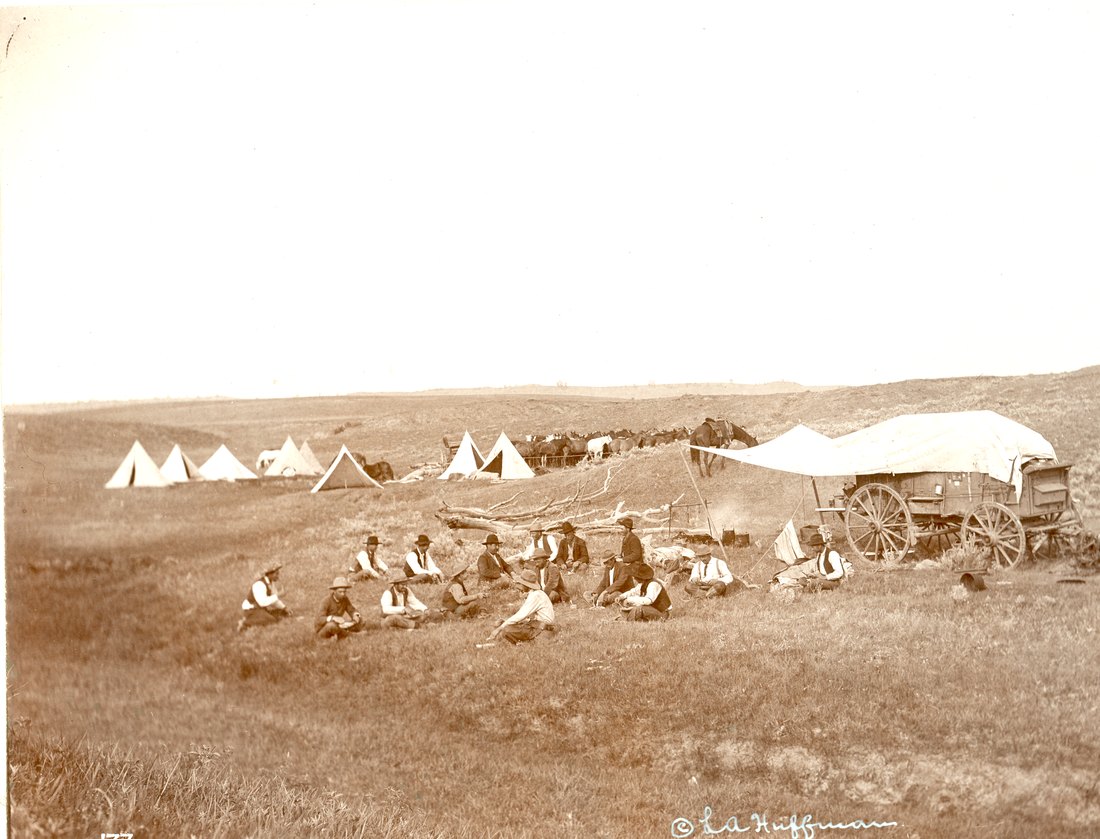
Hamley & Co. — Pendleton, Oregon, 1883
The Northwestern buckaroo country produced its own defining saddlery in Hamley & Co. The Hamley family had been saddlers and leather workers for generations in Cornwall, England, before emigrating to America; in 1883 brothers John James (J.J.) and Henry Hamley set out to establish their own leather and saddle shop, starting in Ashton, South Dakota. Crop failures and a series of fires pushed the business westward — and after Henry's death in the 1890s, J.J. relocated to Pendleton, Oregon, in 1905, setting up in the downtown building the firm still occupies today.
In Pendleton, Hamley became the maker most associated with the working cowboys and buckaroos of the Northwest, and the phrase "riding a Hamley" came to mean riding the best. J.J.'s son Lester was instrumental in publishing the first Hamley cowboy catalog in 1909, and the following year J.J. helped organize the inaugural Pendleton Round-Up — a rodeo the company has supplied with trophy saddles ever since. The firm's mail-order catalogs carried its saddles to farms and ranches across the West, and the Hamley name became a byword for quality that outlasted its founders; the business survives in Pendleton to this day.
The Texas Tradition — Schoellkopf and Myres, 1869–1953
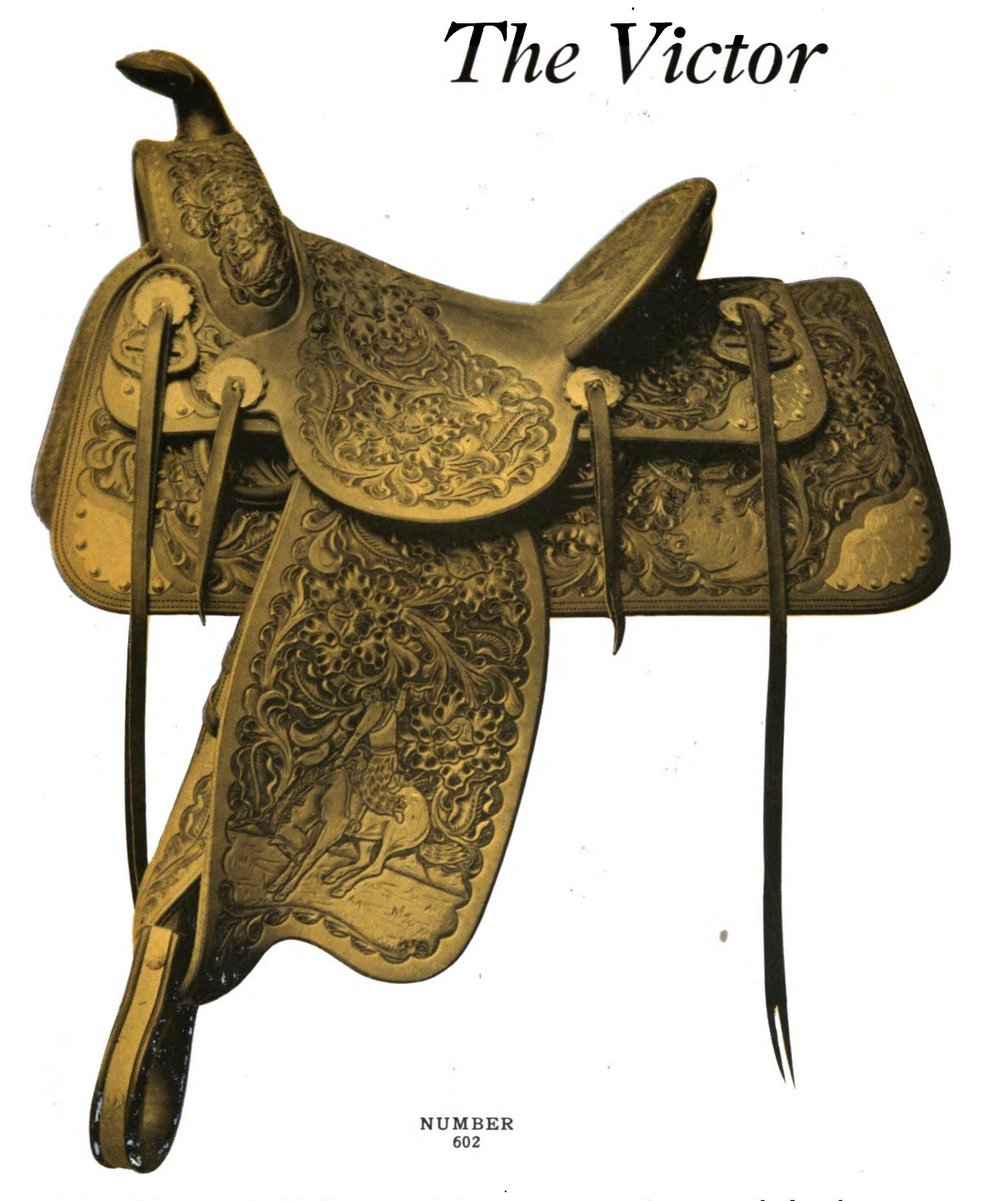
Texas developed its own strong line of stock-saddle making, generally producing heavier working saddles suited to the cattle-drive era. The pioneering Dallas name was Gottlieb Henry Schoellkopf, a German immigrant who had come to Texas after the Civil War to acquire bison hides for an Eastern tanning concern. His first Gulf Coast location at Indianola was destroyed by a storm, and in 1869 he relocated to the small trading village of Dallas and set up a harness and saddlery shop — for a time the only saddlery of its kind in the state. The G.H. Schoellkopf Company grew into one of the largest harness and saddlery houses in the country, known first by its registered "White Elephant" trademark and, after the early 1900s, by its "Famous Jumbo Brand" saddles. By 1914 it was described as the largest such house in the world, and the company remained in business into the 1970s.
Further southwest, Samuel Dale Myres (1871–1953) became one of the most recognized saddle and leather makers of the border country. Born in Johnson County, Texas, he apprenticed as a young man to the saddlery firm of T.R. James & Sons in Cleburne, then worked at his craft in Weatherford before moving to Sweetwater in 1897 and buying his own saddlery and harness business in 1898. He served as mayor of Sweetwater from 1908 to 1911. After a fire damaged the Sweetwater shop in 1919, Myres relocated the business to El Paso in 1920, seeing the border as a larger marketplace. He built serious working saddles alongside elaborate presentation pieces — including a celebrated ornate saddle made for the 101 Ranch Wild West Show — and in his later decades the S.D. Myres Saddle Company became equally famous for fine gun leather, producing the well-known Tom Threepersons holster and, reportedly, the first belt holster adopted by the FBI. His long white beard in his final years gave him a striking resemblance to Uncle Sam, and the nickname "Tio Sam" stuck.
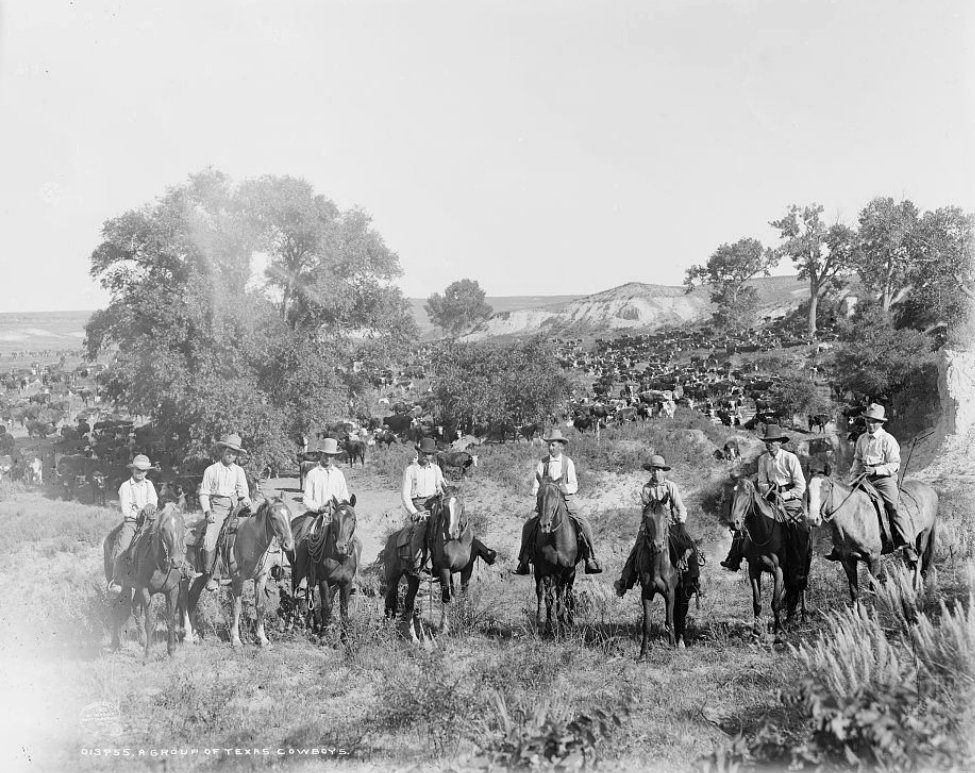
Across these regional centers, the essential elements of the western saddle were fixed: the Visalia tree, the Cheyenne cantle roll and swelled fork, the heavy Pueblo skirts, the Montana tree, the heavy Texas working saddle, iron and steel horns replacing wood, double rigging, the stirrup fender, and hand-tooled leather. Every specialized discipline saddle of the 20th century — reining, cutting, cow horse, ranch — inherited its foundation from this generation of makers.
The Age of Specialization, 1900–1950
Era: 1900–1950As organized western equestrian competition developed in the early 20th century, saddle makers began responding to the specific demands of different events. A roping saddle needed a horn that could absorb the shock of a dallied rope attached to 800 pounds of running steer. A cutting saddle needed a flat, balanced seat that didn't interfere with a horse's extreme lateral movement. A parade saddle needed maximum silver coverage and zero practical functionality.
This specialization was gradual and driven by feedback from working horsemen who noticed that a saddle built for one task often hindered performance in another. A roping horn that cleared the hand quickly was useless for a cutter who never needed to rope. A cutting saddle's flat, minimal seat was unstable under a roper who needed to brace for the jerk of a tied rope.
The rodeo circuit — which formalized in the 1920s and 1930s through organizations like the Cowboys' Turtle Association, predecessor to the Professional Rodeo Cowboys Association — created consistent competitive environments that accelerated saddle specialization. Ropers, barrel racers, and eventually reiners and cutters all developed discipline-specific equipment as their events became more sophisticated.
The roping saddle is arguably the most influential specialized western saddle ever built — its requirements for horn strength, double-rigging stability, and rider security under load influenced the structural engineering of every other western discipline. Even reining saddles, which will never see a rope, inherit their basic architecture from the roping tradition.
NRHA and NCHA — When Disciplines Define the Saddle
Era: 1950–1980Two organizations reshaped western saddle design more than any other force in the 20th century: the National Reined Horse Association, founded in 1949, and the National Cutting Horse Association, founded in 1946. By creating standardized, judged competition formats with rulebooks, these organizations gave saddle makers a clear brief — build a saddle that performs specifically within these parameters.
The NCHA's free-rein rule, which prohibits a rider from using the reins once a cow has been selected, had profound implications for cutting saddle design. A rider who cannot use the reins to balance must rely entirely on their seat and leg position. The cutting saddle evolved in response: lower cantle, flatter seat, minimal pommel blocks, and a centered rider position that allowed the horse maximum freedom to follow the cow without interference from an off-balance rider. The saddle had to keep a rider centered and secure through violent lateral movement — stops, spins, and explosive turns — without allowing the rider to inadvertently signal the horse.
Reining competition, meanwhile, demanded a very different solution. The NRHA's maneuvers — sliding stops of 20-plus feet, 360-degree spins on the hindquarters, flying lead changes, rollbacks, and circles of varying speed — required a saddle that kept the rider in a specific position: slightly forward, deep in the seat, with long legs that could signal the horse without interfering. The reining saddle developed a deep seat with substantial cantle support, a forward-balanced tree that put weight over the horse's center of gravity, and minimal horn (reiners never rope) designed for aesthetics rather than function.
These two saddles — the cutting saddle and the reining saddle — became the two great performance saddle archetypes of the late 20th century, and everything between them (the cow horse saddle, the ranch saddle, the trail saddle) is measured in relation to their poles.
The Modern Performance Saddle, 1980–Present
Era: 1980–PresentThe last forty years have seen western performance saddle design converge on increasingly precise, scientifically informed construction. Several forces drove this convergence:
Prize money. As NRHA and NCHA purses grew from thousands to millions of dollars, the economic stakes of a poorly fitted saddle increased proportionally. Horses and riders performing at the $500,000 level could not afford equipment that compromised performance by even a percentage point.
Veterinary science. Research into equine biomechanics demonstrated conclusively that saddle fit affected horse movement, back muscle development, and long-term soundness. A saddle that pinched the shoulder restricted the horse's ability to move forward freely — a catastrophic flaw in disciplines that required maximum front-end freedom. Saddle fitting became a professional discipline in its own right.
Custom saddle making. The great saddle makers of the late 20th century — Donn Leson, Andreas Maschke (Superior Saddlery), Kyle Tack — built businesses around custom-fitting saddles to specific horse-and-rider combinations. Their clients were the top NRHA and NCHA competitors, and the feedback loop between world-champion riders and master craftsmen drove rapid innovation.
Tree technology. The introduction of fiberglass-reinforced and laminated wood trees in the latter half of the 20th century allowed for more precise, reproducible tree shapes. Andreas Maschke's SYMMETREES™ technology, developed at Superior Saddlery, took this further — manufacturing saddle trees in-house with CNC precision, then hand-finishing and fitting them to specific horses. The SYMMETREES™ system carries a 25-year warranty against breakage, a level of confidence impossible with hand-carved wooden trees.
The Tree: The Foundation of Everything
Professional saddle evaluators — and experienced buyers of used saddles — focus first on the tree, because everything else can be repaired or replaced. A cracked tree cannot be salvaged.
The tree determines four critical parameters of saddle fit and performance:
- Gullet width — the measurement across the front arch of the tree, which must clear the horse's withers without pinching or bearing weight on the spinal processes
- Bar angle — the angle of the bars (the long side rails of the tree) relative to the horse's back, which must match the horse's topline to distribute weight evenly across the muscled back on either side of the spine
- Bar length — longer bars distribute weight over a larger surface area; saddles that are too short concentrate pressure and can cause back soreness
- Rock — the front-to-back curvature of the bars, which must match the horse's back profile to prevent bridging (bearing weight only at the front and rear, with a gap in the middle)
The major tree width categories used in western saddlery — semi-quarter horse bars, quarter horse bars, full quarter horse bars, and wide or draft bars — were originally defined by the average dimensions of different horse breeds. Quarter horses, which dominate western performance, typically fit in quarter horse or full quarter horse bars depending on their muscling and withers conformation.
A tree that is too narrow will pinch the horse's withers, restricting shoulder movement and causing pain that manifests as reluctance to move forward, head-tossing, back soreness, and eventually behavioral problems. A tree that is too wide will rock on the horse's back and allow the saddle to bear weight on the spine rather than the muscled back panels — equally damaging. Proper tree fit is not optional. It is the foundation on which everything else depends.
The Great Makers Shaping the Industry Today
The western saddle's evolution from generic working tool to precision performance instrument was driven by a handful of craftsmen who combined traditional leather-working skills with an engineering mindset and close relationships with elite competition riders.
Andreas Maschke / Superior Saddlery represents the modern evolution of this tradition. Maschke began building saddles in the early 2000s and made the radical decision to manufacture his own trees — the SYMMETREES™ system — rather than purchasing from outside suppliers. This vertical integration allowed him to control every variable of tree fit and to guarantee his trees for 25 years. His endorser roster reads like an NRHA Hall of Fame ballot: Shawn Flarida, Craig Schmersal, Casey Deary, Jason Vanlandingham, Cade McCutcheon, Tom McCutcheon. When the world's best reiners choose to put their name on a saddle, the equipment has passed the most demanding real-world test available.
Master Custom Saddlemakers
Alongside the performance-brand makers, a parallel tradition of individual craftsmen builds saddles largely by hand, many of them members of the Traditional Cowboy Arts Association, an organization founded to preserve saddlemaking, silversmithing, bit and spur making, and rawhide braiding.
Dale Harwood — Shelley, Idaho
Dale Harwood is one of the most influential western saddlemakers of the modern era. Raised on an Idaho ranch, Harwood learned leatherwork while repairing tack and later worked as a buckaroo and rodeo contestant. He opened his first saddle shop in Idaho Falls in 1961 and became known for controlling virtually every stage of construction, including building his own saddle trees. Harwood was a founding member of the Traditional Cowboy Arts Association and received a National Heritage Fellowship from the National Endowment for the Arts in 2008. He is now retired from saddlemaking.
Cary Schwarz — Salmon, Idaho
Cary Schwarz is a master saddlemaker and leather artist. He began working with leather in 1972 and later studied saddlemaking under Jesse Smith in Spokane, Washington. His development was strongly influenced by the work of Dale Harwood, Chuck Stormes, and the Ray Holes Saddle Company. Schwarz is particularly respected for combining traditional western saddle construction with sophisticated leather carving and artistic design. A founding member of the Traditional Cowboy Arts Association, he has also devoted considerable time to teaching and preserving the saddlemaking tradition.
Chuck Stormes — Millarville, Alberta
Chuck Stormes ranks among the most respected western saddlemakers of his generation. Stormes built custom saddles for working ranchers, horsemen, and collectors during a career spanning more than six decades. He developed a particularly deep knowledge of historic western saddle construction and saddle trees and became an important authority on the evolution of the Wade saddle. Stormes was also a founding member of the Traditional Cowboy Arts Association. After more than 60 years in the trade, he closed Stormes Saddle Company and retired in 2024.
Jeremiah Watt — Coalinga, California
Jeremiah Watt is a prominent western saddlemaker, silversmith, engraver, and bit-and-spur maker whose career began in 1976. A Canadian native, Watt attended saddlemaking school in Amarillo, Texas, before traveling through the West studying established saddle shops. He later worked for Chuck Stormes before moving to the United States and settling with his family in Coalinga. His work combines functional saddle construction with elaborate leather carving and metalwork, making him one of the better-known contemporary craftsmen working across several traditional cowboy arts.
Troy West — Azle, Texas
Troy West began building saddles after going to Amarillo in 1977 to learn the trade. Raised around cattle, calf roping, and team roping, West approached saddlemaking from the perspective of someone who understood how western saddles were actually used. He has spent much of his career studying not only leatherwork but saddle-tree design and the relationship between the horse, tree, and rider. West is a member of the Traditional Cowboy Arts Association and has won Best of Show at the Boot and Saddlemaker Roundup multiple times.
Chas Weldon — Billings, Montana
Chas Weldon is a longtime Montana saddlemaker known especially for working-cowboy and Wade-style saddles. Before becoming a full-time craftsman, Weldon worked on large ranches in Montana and Wyoming, giving him practical knowledge of what a saddle must accomplish during long days of ranch work. He apprenticed at the historic Connolly Saddlery in Billings and also worked with Sheridan leatherworker Don King. During a career extending more than four decades, Weldon developed a reputation for highly refined leather carving combined with traditional, functional saddle construction.
Steve Mecum — Crowheart, Wyoming
Steve Mecum is a saddlemaker whose craftsmanship grew directly from a lifetime spent horseback. Raised around ranching in northern California, he moved to Wyoming in 1972 and worked as a cowboy, hunting guide, horse trainer, and ranch hand. In 1986, Sheridan craftsman Bob Douglas taught Mecum to build his first saddle. He subsequently developed a career building custom saddles for working cowboys, horsemen, and collectors. His practical experience — including starting hundreds of young horses — has heavily influenced his emphasis on balance, durability, comfort, and function.
John Willemsma — Westcliffe, Colorado
John Willemsma is a veteran western saddlemaker and the craftsman behind LJ's Saddlery. His work emphasizes traditional construction, functional cowboy gear, and careful attention to saddle fit and durability. Willemsma has spent decades studying saddle trees, construction methods, and the requirements of working horsemen. A member of the Traditional Cowboy Arts Association, he has successfully moved between the worlds of hard-use cowboy equipment and highly finished collectible western art. He has also worked to pass his saddlemaking knowledge to another generation, including his son Logan.
Rick Bean — Idaho
Rick Bean founded R.C. Bean Saddlery in 1978 when he was only 17 years old. Over the following decades, he developed a distinctive reputation for deeply carved and highly artistic western saddles. Bean's elaborate "Legacy" and exhibition saddles often incorporate western history, landscapes, cowboys, and storytelling into the leather itself, yet he has consistently maintained that even highly decorated saddles must remain structurally sound and functional. A longtime member of the Traditional Cowboy Arts Association, Bean's work has been exhibited through the National Cowboy & Western Heritage Museum.
Pedro Pedrini — Spring Creek, Nevada
Pedro Pedrini was born in France in 1952 and grew up in the Swiss Alps, where his interest in horses led him toward western riding and leatherwork. Determined to learn traditional American saddlemaking, he came to the United States in 1978 and eventually found work at the historic J.M. Capriola Company in Elko, Nevada. Pedrini subsequently traveled and worked throughout the West while developing his craft before establishing Pedrini Saddle Company. He became a member of the Traditional Cowboy Arts Association in 2007 and represents an unusual European-to-American pathway into traditional western saddlemaking.
Gabe Williams — Standish, California
Gabe Williams is the craftsman behind Gabe Williams Saddle Company. His work reflects the traditional working-cowboy approach to saddlemaking, with an emphasis on usable ranch saddles supported by high-quality leatherwork and hand craftsmanship. Williams works from Standish in northeastern California and has continued developing his skills in saddle construction, leather carving, and hand stitching. In 2026, Williams was welcomed as a saddlemaker member of the Traditional Cowboy Arts Association, placing him among a select group of contemporary craftsmen working to preserve traditional cowboy arts.
Carol Gessell — Ennis, Montana
Carol Gessell is a saddlemaker and leatherworker whose interest in the craft began with a childhood leatherworking kit. Years later, she returned to leatherwork to make equipment for her own horses and eventually established a custom leather business around 1998. By 1999 she was working leather full-time and soon expanded into building western saddles. Today she operates Black Horse Leatherworks & Saddlery in Ennis. Gessell is a member of the Traditional Cowboy Arts Association and produces custom saddles and western horse gear combining practical construction with accomplished decorative leatherwork.
Nancy Martiny — May, Idaho
Nancy Martiny is a rancher, horsewoman, and master saddlemaker known particularly for her flowing floral leather carving. She built her first saddle in 1987 after receiving two saddle trees made by Dale Harwood, who subsequently helped guide her through her first build. Martiny continued studying with leading makers including Harwood and Cary Schwarz while developing her own distinctive style. Working from her family's ranch near May, she primarily builds saddles intended for working cowboys and ranchers. In 2021, Martiny received the Idaho Governor's Award in the Arts for Excellence in Folk and Traditional Arts.
Conrad Koppenhafer — Dorris, California
Conrad Koppenhafer combines the experience of a working cowboy with decades of traditional western saddlemaking. Raised around cowboys in Colorado, he began formally learning saddlemaking in 1975 at Texas State Technical Institute in Amarillo. He subsequently gained experience at Ryon's in Fort Worth and the historic J.M. Capriola Company in Elko, Nevada. Koppenhafer later established Butte Valley Saddle Company in Dorris, producing and repairing the equipment used by working horsemen. His career has also included teaching leathercraft, and one of his notable commissions was a saddle built for President Ronald Reagan.
Scott Brown — Texas and Utah
Scott Brown began his professional saddlemaking career after attending saddle school in Amarillo, Texas, graduating in 1977. He moved to Elko, Nevada, where he worked for the historic J.M. Capriola Company under saddlemaker Eddie Brooks. Brown later returned to cowboying on northern Nevada ranches before moving back to Texas and building saddles for Big Bend Saddlery in Alpine. His work reflects both professional saddle-shop training and years spent using saddles as a working cowboy. Brown later moved to Utah, where he also pursued the demanding craft of traditional violin making.
Bob Marrs — Amarillo, Texas, 1927–2022
Bob Marrs was one of the great Texas saddlemakers of the postwar era. A former working cowboy and World War II Army veteran, Marrs built his first saddle in 1949 and took over Stockman's Saddle Shop in Amarillo in 1954, operating it as Bob Marrs Stockman's Saddle Shop for 38 years. He became especially influential in developing saddles for cutting-horse riders while also earning recognition for his distinctive leather carving, including his signature poinsettia pattern. Marrs signed more than 3,200 saddles during his career and continued working with leather into his nineties. He died in 2022.
Performance Brands
Donn Leson of Grants Pass, Oregon, built his reputation through technical precision and the distinctive Reinmaker model — a deep-seated reining saddle with exceptional lateral stability. Leson saddles in good condition hold their value better than almost any other used western saddle, a testament to both their construction quality and their continued relevance to working reiners.
Kyle Tack produces saddles at a price point that made serious reining equipment accessible to amateur competitors without sacrificing the tree quality and balance required for actual performance. Kyle Tack reiners are among the most common saddles in the certified used market for good reason — they perform reliably across a wide range of horse types and rider builds.
Martin Saddlery of Greenville, Texas, built its reputation in the team roping and cutting disciplines before expanding into reining. The Trevor Dare signature reiner represents Martin's competition-focused work — a substantial full-silver package on a well-engineered tree.
Western Saddles Today — 103 Saddles, Every Discipline
The western performance saddle market in 2025 operates at two distinct levels: the new custom market, dominated by makers like Superior Saddlery who build to order for individual horse-and-rider combinations, and the certified used market, where decades of fine saddle-making are available to buyers who know how to evaluate quality.
New Superior Saddlery models — 63 of them, bearing the names of the sport's greatest competitors — represent the current state of the art in reining saddle design. Each one was developed in collaboration with the named rider, refined through competition use, and built on SYMMETREES™ trees that carry a 25-year warranty.
David Solum's certified used inventory represents the market's memory — 40 saddles from makers including Kyle Tack, Donn Leson, Superior, Martin, and others, each personally inspected and honestly described by a specialist with 40 years of experience evaluating western performance saddles. The used market is where extraordinary saddles — $8,000 Donn Leson Reinmakers, premium full-silver show models — become accessible at prices that reflect realistic market value rather than new retail.
Between them, these two inventories — available together only through the WesternSaddles.ai Saddle Network — cover every western performance discipline at every price point from $495 to $7,995. The 60-second Saddle Matchmaker on our home page scores all 103 against your specific criteria and ranks your top matches. Start there.